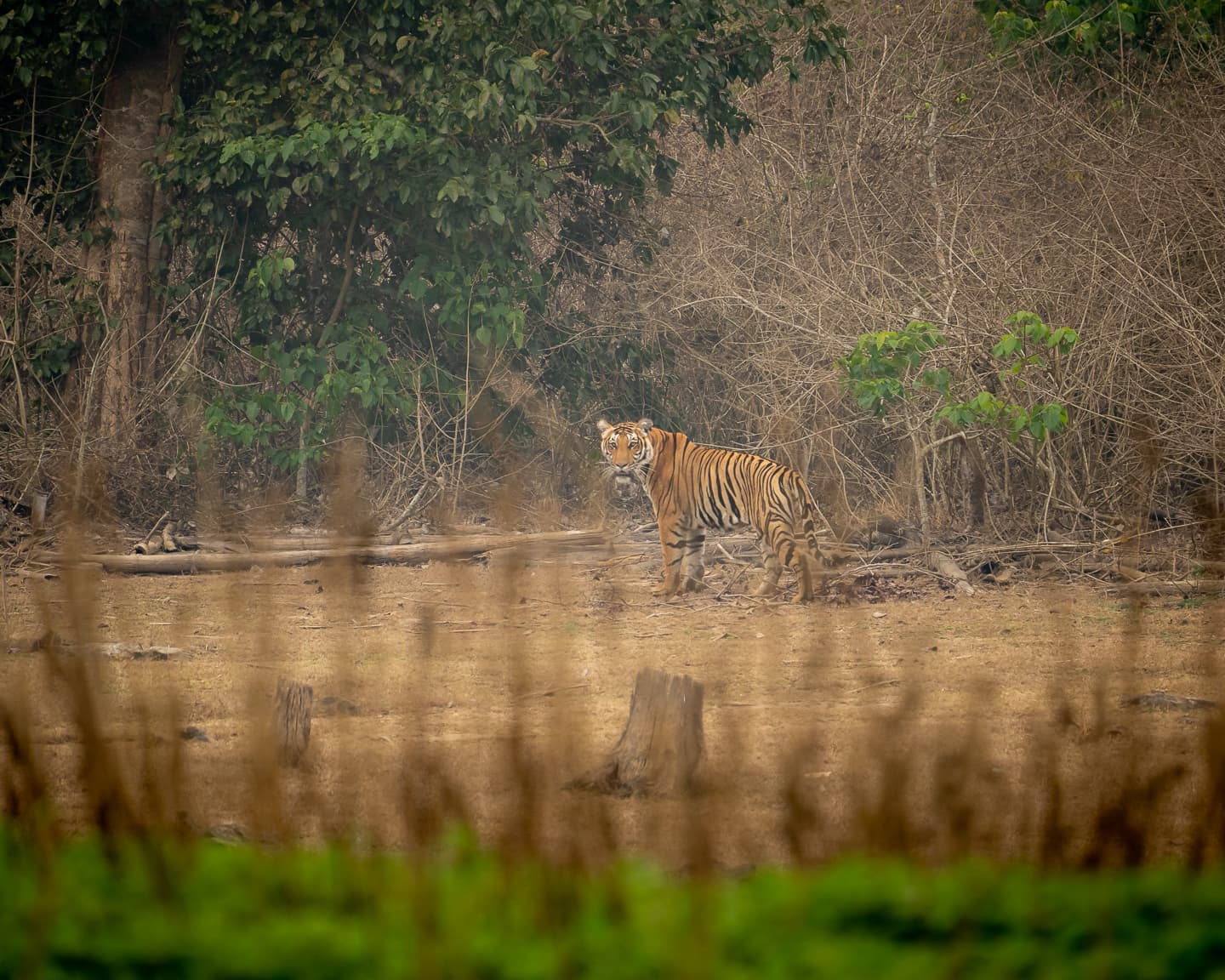
Kabini, on the edge of Nagarhole National Park, is as close to heaven as a wildlife lover can hope to get. The backwaters, the dry summer forests, the distant calls of birds and deer. It is one of my favorite places on this planet. Every visit feels like returning to an old friend.
Three Dry Safaris
By the time this story begins, I had already done three consecutive safaris without seeing a big cat. No tiger stepping out of the lantana, no leopard draped on a tree branch. Just beautiful landscapes, elephants, birds, and the quiet ache of near misses.
On the afternoon of my last safari, I turned to my friend and said, "Let's do the boat ride. If the cats don't want to see us, at least the birds will." It was summer, the water levels were low, and the lake was alive with birdlife. The chances of seeing a big cat from the boat were slim, but the idea of drifting along the water with our cameras felt right.
We both agreed. One safari left, one more chance. This time, on the water.
Drifting for Birds
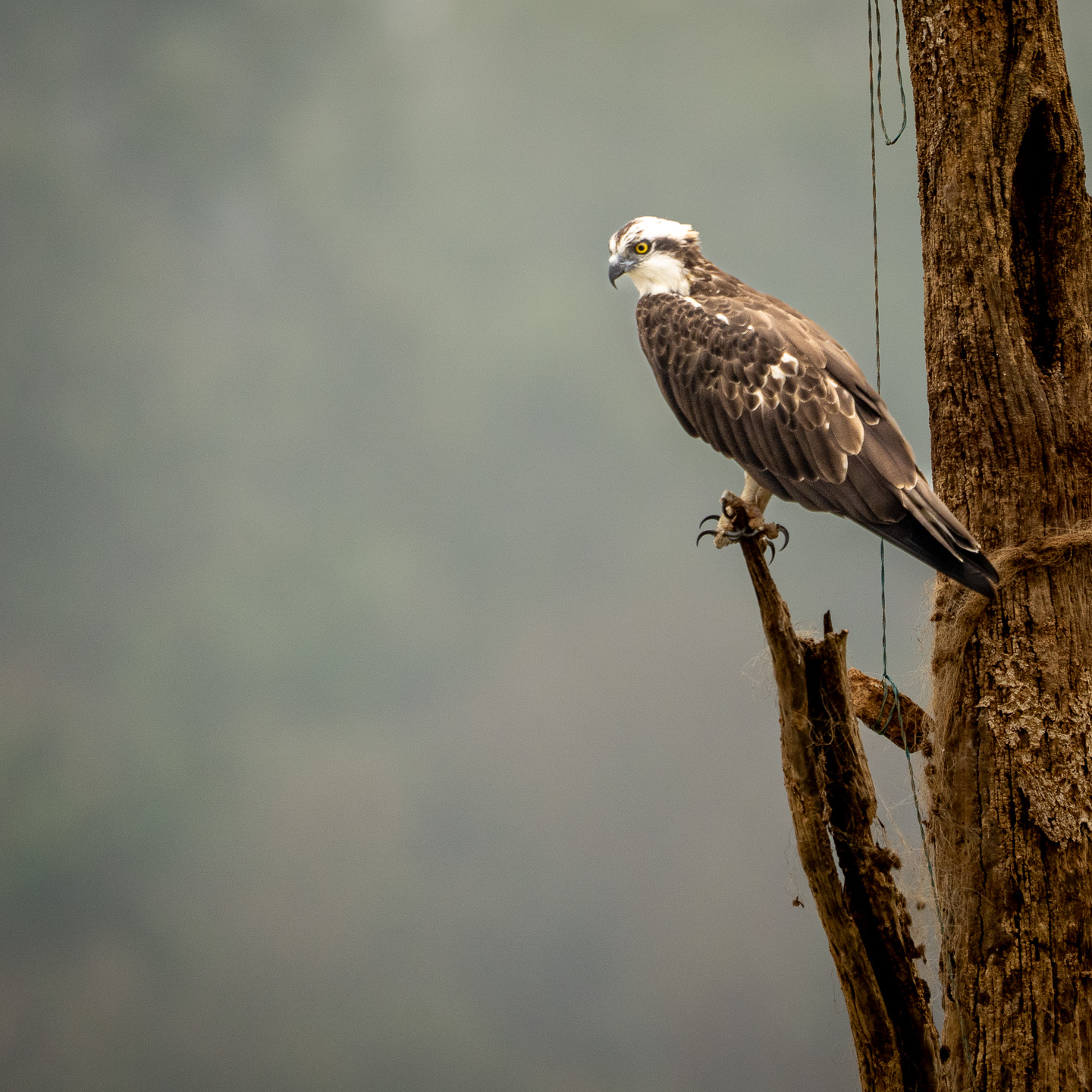
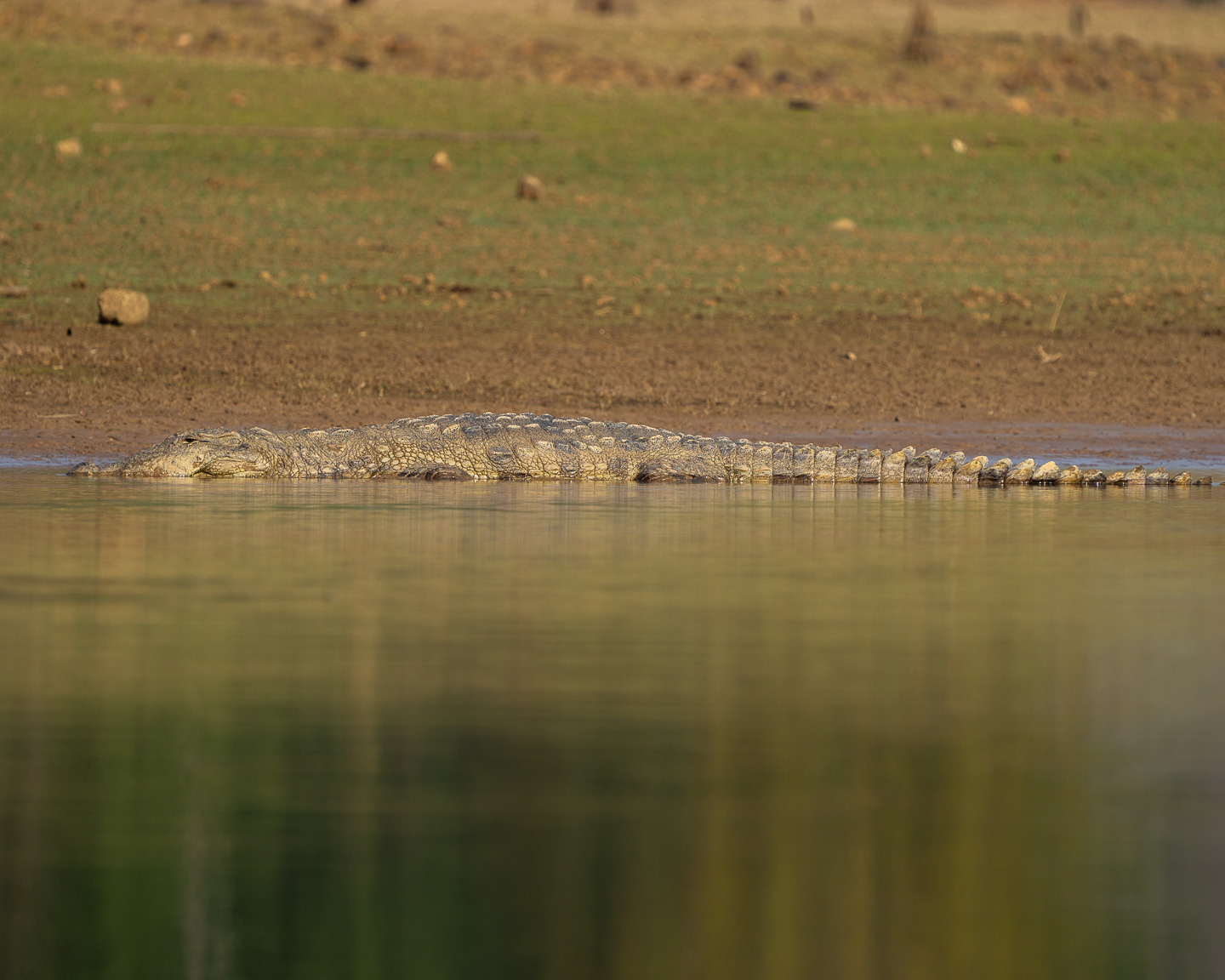
We climbed into the boat, cameras ready, expectations softened. The guide was warm and enthusiastic, pointing out the rich summer life around the lake. Cormorants drying their wings, egrets stalking the shallows. An osprey sat on a weathered stump near the water's edge, scanning the shallows for movement, every muscle coiled as if the next splash might finally be its chance. As we scanned the shoreline for birds, we also spotted a huge marsh crocodile hauled out on the mudbank, trying to soak in every last strip of evening sunshine before it slipped away.
As the boat moved along, the evening light began to mellow, turning the water into a sheet of bronze. We settled into the rhythm of the lake: birds calling, gentle engine hum, the soft splash of the bow cutting through the water.
Eventually, we approached a narrow channel where the water funneled between two strips of land. On one side lay Kabini; on the other, Bandipur Tiger Reserve. Two forests, two states, one shared wilderness.
The Signal
Up ahead, on the Kabini side, we noticed a few jeeps parked and facing the opposite shore. The guests inside were alert, bodies angled forward, binoculars out. Something was happening.
Our boatman cut the speed and raised his hand, signaling silently to the jeep drivers: What are you seeing?
In this world, hand signs are a language of their own. An "L" with one hand usually means leopard. A "T" with both hands means tiger.
The reply came back clearly: "T".
Not just that. They were pointing across, towards the Bandipur side. My friend and I exchanged a quick glance, the kind that says, "No way… could it be?"
Without a word, our driver switched off the engine. The boat began to drift, carried only by the current.
The Sound of Waiting
With the engine off, the forest suddenly felt much closer. All we could hear was the soft glide of the boat through the water and the distant, haunting call of a cuckoo from deep inside the trees.
We scanned the Bandipur shore, eyes sweeping every rock, bush, and patch of shade. Nothing. Just sand, dry grass, and a few scattered stones.
"Here it is," our driver whispered.
My eyes narrowed, heart racing, but I still saw nothing. The tiger was only about ten meters away from us, but it had melted into the landscape so perfectly that our human eyes were no match for its camouflage.
Then, as the drifting boat carried us a little closer, the forest shifted.
The Young Male
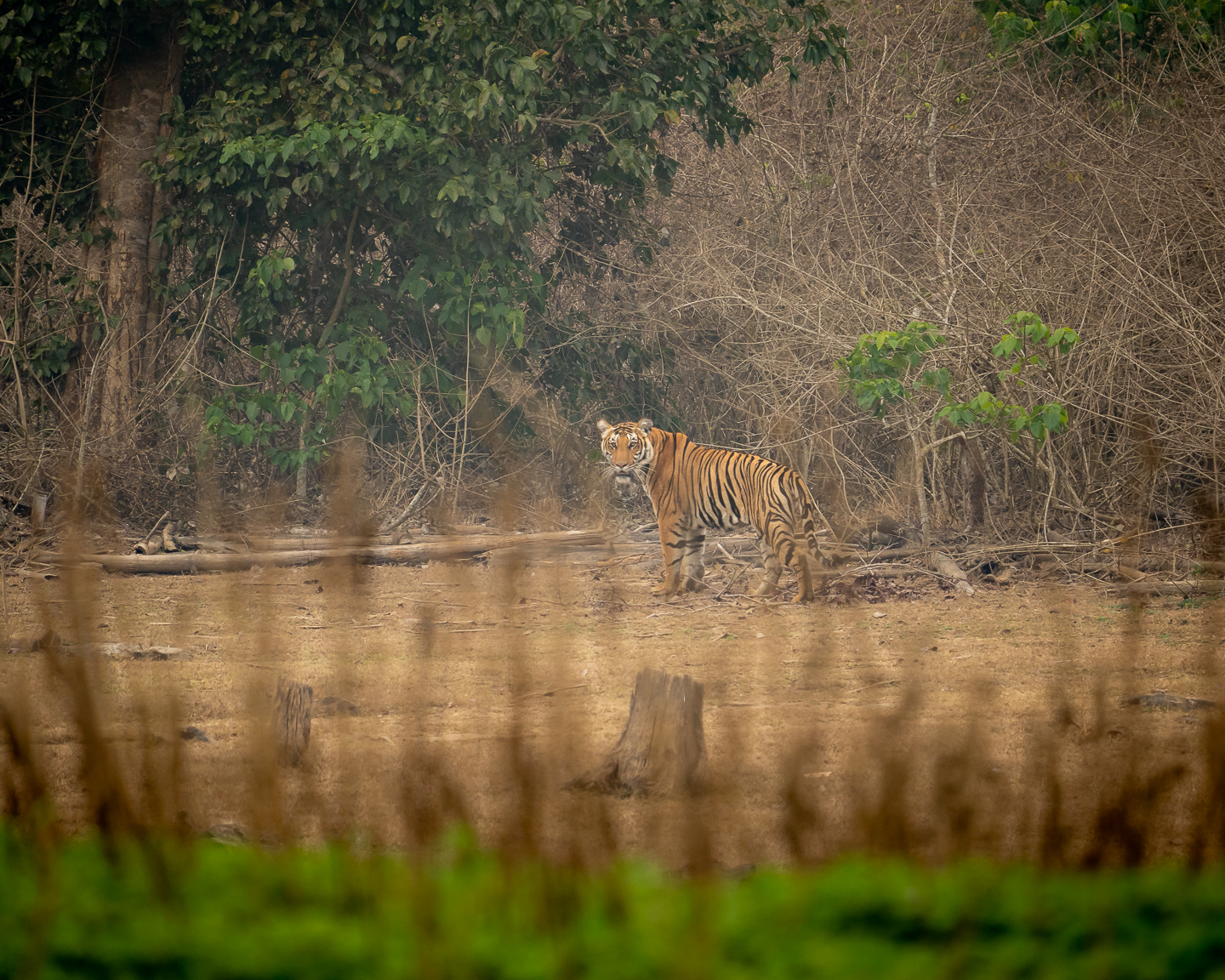
A shape rose from the ground as if the earth itself had decided to stand. The tiger got up. Suddenly visible, all muscle and stripes, a young male in his prime.
For a few seconds, he watched the moving boat with quiet intensity. We stayed silent, frozen, knowing that any sudden sound or engine start might spook him. There was no way to control the boat's exact position without risking the moment, so we let the current decide the distance between us.
The tiger began to walk, then picked up pace, moving back toward the forest with that effortless power only big cats possess. Sand kicked up behind his paws, tail flicking, body tense but unhurried.
Just before he disappeared into the line of trees, he paused.
He turned his head and glanced back. Just one look, straight in our direction. It wasn't curiosity, it wasn't fear. It felt more like a brief, indifferent acknowledgment: I see you.
That was my moment. I pressed the shutter and captured the frame I had been waiting for, without even knowing it.
What Kabini Taught Me That Day
I had gone onto that boat prepared to trade big cats for birds, calling it a "consolation safari." Instead, Kabini reminded me that the forest doesn't follow our categories of jeep safari and boat safari, good safari and bad safari.
Three dry drives had taught me patience; that drifting boat and that young tiger between two shores taught me surrender. You can plan your lens, your route, your expectations, but not your encounter.
Sometimes, the tiger you're looking for is ten meters away, invisible until the forest decides to let you see.
Shot on the Kabini backwaters, between Nagarhole National Park and Bandipur Tiger Reserve, India.